
By Microcontrollers vs Processors 1475
MCU vs MPU: Full Perspective on Key Differences
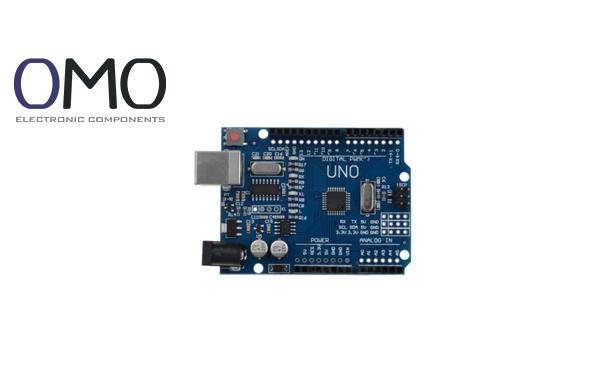
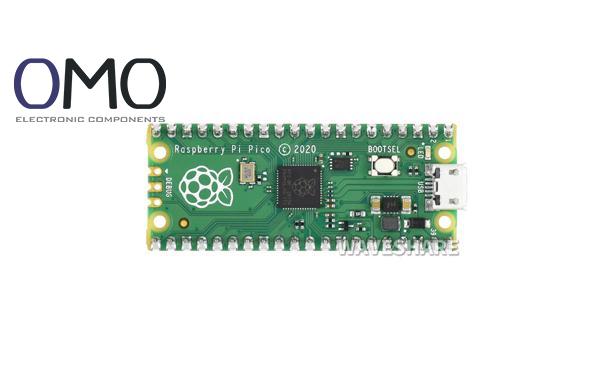
A microcontroller (MCU) is like a small computer on one chip. It includes a Central Processing Unit (CPU), memory, input/output ports (I/O), and special peripheral circuits on one single silicon chip. Its main goal is not high computing power, but embedded control, real-time response, and specific task execution. It can work alone, sense the real world (through sensors), and control devices (like motors or lights). It acts as the control center in IoT (Internet of Things), industrial control, and consumer electronics.
The MCU runs a cycle called "fetch-decode-execute":
Its key feature is direct control of resources on the chip using register mapping. When events happen (like a button press or timer overflow), the interrupt system will stop the main program and run the Interrupt Service Routine (ISR) quickly. This ensures fast response time (<1ms).
An MCU is a highly integrated chip with:
| Peripheral Type | Examples | Main Function |
| Timer/Counter | TIM/CNT | Timekeeping, delay, pulse counting, PWM |
| ADC (Analog-to-Digital Converter) | ADC | Converts analog signals to digital |
| DAC (Digital-to-Analog Converter) | DAC | Converts digital values to analog |
| Communication Interfaces | UART, SPI, I2C, USB, CAN, LIN | Communicate with sensors, displays, modules |
| PWM (Pulse Width Modulation) | PWM | Motor control, LED brightness, power control |
| Watchdog Timer | WDT | Resets system if software fails |
Bit Width:
Instruction Set Architecture (ISA):
Memory Architecture:
Summary of Features:
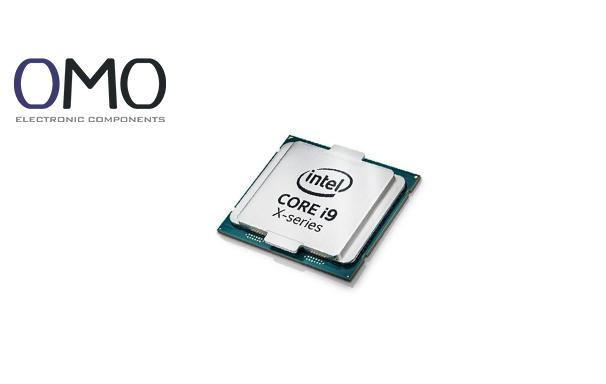
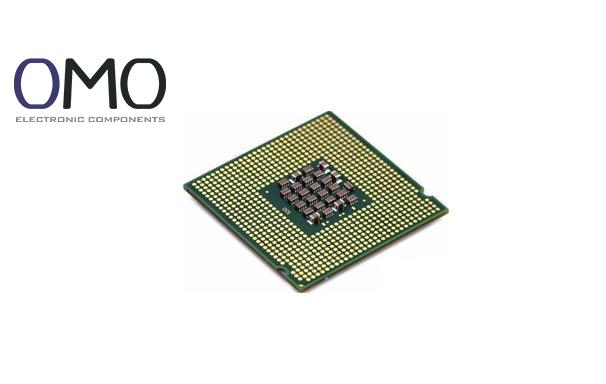
A processor (usually means MPU or CPU) is the computing engine of a system. It runs a complex Operating System (OS), many applications, and handles large data processing. The CPU chip itself cannot work alone. It needs external memory, storage, and controllers to become a full computer system. This is the core of PCs, smartphones, and servers.
Central Processing Unit (CPU):
Main Types:
Summary of Features:
Understanding the difference helps you choose the right one. The table below compares 10 core features clearly:
| Comparison Item | Microcontroller (MCU) | Processor (MPU/CPU) |
| System Integration | Highly integrated! MCU includes CPU, memory, and many peripherals in one chip. For example, the Chipown CW32 series MCU has built-in Flash/RAM, ADC, CAN, USB, etc., which supports many functions in one place. | Core computing unit. Usually includes only CPU core, cache, and MMU (Memory Management Unit). It needs external RAM, ROM, and peripherals to be a full system. |
| Main Purpose | Embedded control, real-time tasks, and specific functions. | General computing, running complex OS (Operating Systems) and apps. |
| Computing Performance | Medium to high performance (focus on control). It runs simple to complex logic control. | Very high performance (clock in GHz). It works better in high-speed data processing and complex algorithms. |
| Power Consumption | Very low power! (μA to mA). For example, ST’s STM32L low-power MCU can use less than 1μA in standby mode. Good for battery-powered IoT. | Medium to high power (Watts to 100+ Watts). High performance means more heat and power. |
| Memory Structure | On-chip memory (KB to a few MB): Uses built-in SRAM and Flash. Limited size but stable access. | External large RAM (GB DDR) + external memory. Focus on speed and size. |
| On-Chip Peripherals | Many types integrated! Built-in ADC, DAC, Timer, UART, SPI, I2C, USB, CAN, PWM, etc. These are ready to use and make development easier. | High-end peripheral controllers like PCIe, USB3.x, SATA. Basic/slow peripherals often need extra chips, which adds complexity. |
| Startup Speed | Very fast (in milliseconds)! MCU runs from Flash directly. No need to load OS. | Slower (in seconds). It loads bootloader first, then a big OS and apps. |
| OS Dependency | Bare-Metal or small RTOS (like FreeRTOS, Zephyr). Logic is clear and simple. | Needs a full OS (Linux, Windows, Android, etc.). Uses processes, threads, and virtual memory. |
| Development Complexity | Lower. Developers use registers/libraries directly. Toolchains are simple. | Higher. Developers must understand OS, drivers, multitasking, security, and middleware. |
Smart Home Thermostat:
Task: Read sensor values (temperature/humidity) using ADC, control AC/heater with relay via GPIO, connect to phone app through BLE (UART/SPI). Runs in ultra-low power.
MCU Advantage: Single-chip integration (e.g., N32L436 with ADC and interfaces), ultra-low sleep power (as low as 0.3μA), high cost-performance. Why not MPU? Too costly and high power; no need for a complex OS.
Car Window Control:
Task: Detect button signal (GPIO), control motor direction and speed using H-Bridge and PWM, monitor motor current for safety (ADC + comparator).
MCU Advantage: Real-time response (<100μs), automotive-grade reliability (e.g., ChipON automotive MCU), built-in PWM, ADC, comparator, and CAN/LIN. Low cost for mass use.
Simple Medical Device (e.g., Digital Thermometer):
Task: Measure thermistor voltage (with high-precision ADC), calculate temperature, show value on LCD, simple one-button use.
MCU Advantage: Built-in high-precision ADC and LCD driver save external parts, low power extends battery life, small size, and low BOM cost.
Industrial Sensor Gateway (Basic Aggregation):
Task: Collect digital/analog sensor signals (I/O, ADC), process them, and send data via RS485/IO-Link/wireless to PLC/HMI.
MCU Advantage: Rich built-in communication (RS485, UART, SPI, I2C), works in harsh environments (-40°C to 105°C), reliable and low cost.
Smart Home Control Hub / Edge Gateway:
Task: Run Linux, decode camera RTSP streams, use AI NPU for voice recognition, manage Zigbee/Thread/Bluetooth Mesh/WiFi, offer Web/App interface.
MPU Advantage: Strong multi-core processor (e.g., NXP i.MX 8M), GPU/NPU handles multimedia and AI, large memory (512MB+ DDR) for OS and apps, many fast ports for network and storage.
High-End Industrial Edge Station / Vision Inspection:
Task: Collect real-time data from many PLCs (OPC UA, MQTT), run time-series database (like TimescaleDB), use machine vision and AI (TensorFlow Lite), and show HMI.
MPU Advantage: Powerful multi-core CPU (e.g., TI AM6x) processes big data, GPU helps with AI vision tasks, Linux supports protocols and databases, fast SSD stores history data.
Advanced Consumer Drone Flight Control:
Task: Handle high-frame video for obstacle/target tracking, combine IMU and GPS for motion control, plan paths, send HD video, use 4G/5G.
MPU Advantage: Powerful AP (Qualcomm Snapdragon, Rockchip RK series) has CPU, GPU, ISP, and VPU for visual processing and data work.
Cloud Server Node:
Task: Run virtual machines (KVM, VMware), support many web/database/AI services.
MPU Advantage: Extreme computing power and data speed (e.g., AMD EPYC, Intel Xeon, Ampere Altra), TB-level RAM, fast NVMe storage, 100GbE+ network ensures fast data, power used mainly for performance.
There is no absolute winner between MCU and MPU. Choose based on the key needs of your application. See the table below:
| Feature | Microcontroller (MCU) | Processor (MPU/CPU) |
| Advantages |
- High integration, small system size - Very low cost (chip + BOM) - Very low power, long battery life - Excellent real-time response |
- Top computing power - Runs complex OS with rich software - Big memory for hard tasks - High I/O speed (PCIe, USB4, 100GbE) - Strong ecosystem: OS, tools, middleware, cloud |
| Disadvantages |
- Weak general computing, not for big data - Limited on-chip memory - Poor support for high-speed peripherals - Only supports small OS or none (RTOS) - Not good for very complex multi-tasking |
- Complex system (needs many chips) - High chip and system cost - High power use, cooling needed - Slow boot, less instant response - Harder software development (OS, drivers, security) |
A microcontroller is a small integrated circuit (IC) programmed to carry out specific functions by running instructions from its onboard memory.
A microcontroller is a small integrated circuit built to execute dedicated tasks by governing and communicating with other electronic components. It senses, processes, and reacts to its environment.
A computer's processor, also called the CPU, delivers the required processing power and executes the instructions needed for its operation. This encompasses executing tasks from basic calculations to managing sophisticated software.