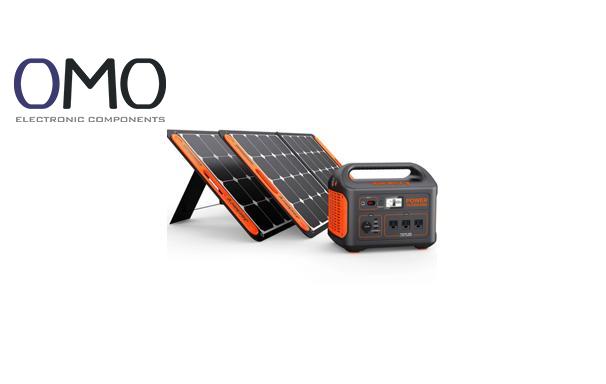
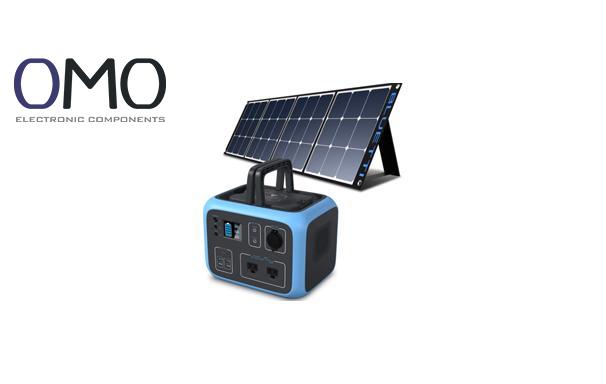
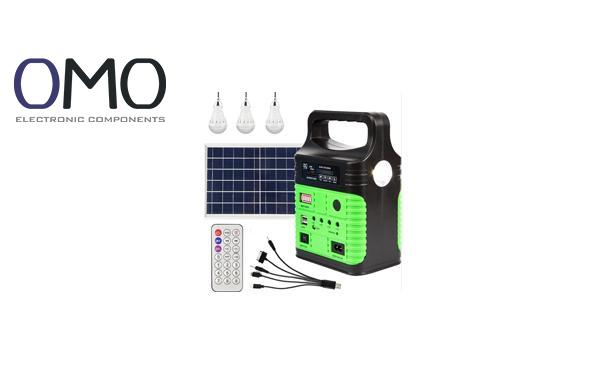
A solar generator is not a traditional fuel generator. It is a portable solar power storage system. It uses solar panels to turn free sunlight into electricity and stores it in a battery. It does not burn fuel. The system works in three steps: collect sunlight, change it into electricity, and store the energy in a battery. Then it gives power (AC or DC) through the output ports.
Key Parts and Working Principle
The system has four main parts:
Solar Panel: It uses the photovoltaic effect to turn sunlight into DC (direct current).
Monocrystalline: high efficiency
Polycrystalline: good price-performance
Thin-film: lightweight
Charge Controller: It works like a “traffic police”.
PWM (Pulse Width Modulation): basic type
MPPT (Maximum Power Point Tracking): more efficient (up to 30% better)
Battery: It stores the energy.
Lead-acid: cheap, heavy, short life (~500 cycles)
Lithium battery: light and long life
LiFePO4 (Lithium Iron Phosphate): very safe and stable, over 3000 cycles
NMC (Nickel Manganese Cobalt): higher energy density
Inverter: It changes DC to AC.
Pure Sine Wave: works with all devices, especially motors; quiet and efficient
Modified Sine Wave: cheaper, may cause noise or issues with sensitive devices
Work Flow: Sunlight → (panel) → DC → (controller) → (battery storage) → (inverter) → AC for use
Size and Capacity Range
Portable Small Size: 100–300Wh, book-sized, for emergency charging
Medium Use: 500–2000Wh, like a suitcase with wheels, for camping or basic backup
Home Backup: 3000Wh+, needs fixed place or cart, runs key appliances
Commercial/Industrial: 10kWh+, fixed setup, for larger power needs
Main specs to check:
Battery capacity (Wh) = how much energy it stores
Inverter power (W) = how much it can power at once
Application Scenarios
Key Advantages
A solar generator gives six major benefits:
Zero Emission: No greenhouse gases during use
Energy Independence: Works without power grid; great for unstable areas
Silent Running: No engine noise, only ~30dB
Very Low Use Cost: Sunlight is free; you only pay once at the start
No Maintenance: No oil change or spark plugs needed
Indoor Safety: No fuel storage risk (still ensure good ventilation for battery)
Main Use Cases
It works in many situations:
Outdoor Living: For camping, RV, fishing, drones
Emergency Backup: Runs fridge, phone, or medical devices after storms or quakes
Mobile Work Site: Powers tools and lights on farms or construction sites
Off-Grid Living: Supplies power in cabins or houseboats
Home Convenience: Runs garden, balcony, or garage tools without wiring
Whole-House Power Supply
Working Principle
Same steps apply: sun → electricity → battery → inverter → appliances.
Main challenges:
High Starting Power (like motors)
Long Run Time (like all-day use)
How to Connect to Home
Three common ways:
Manual Plug-in: Plug key devices directly into the generator (a bit complex)
Dedicated Circuit: Use a transfer switch to power home circuits safely (needs an electrician, recommended)
Smart Integration System: Auto-switch between grid, generator, and solar (easy to use, but expensive)
Size and Capacity Planning
Two key specs matter:
Inverter continuous power (W/kW): Must be higher than the total power of devices you use at the same time. Add 20% extra.
Battery capacity (Wh/kWh): Decides how long it can run during blackout. Calculate total energy use of your key loads.
Example: Daily Power Estimate for Home Essentials
Device
Power Range (W)
Daily Use Time (h)
Daily Energy Use (Wh)
Energy-saving fridge
50–150
24 (on/off cycle)
1200–3600
LED lights (4 x 8W)
32
5
160
Router/Modem
10
24
240
Phone/Laptop charge
30 (total)
2
60
Small fan
60
6
360
Total
~182W
—
2020–4420 Wh
Pros and Cons (for Whole-House Use)
Pros:
Quiet, zero-emission emergency power
Solar power cuts long-term cost
Boosts energy independence
Safe for indoor use
Cons:
High upfront cost: Big systems are expensive
Power limits: Hard to run AC/heaters or run full power long
Weather-dependent: Cloudy days reduce charging
Needs space: Batteries and panels take room
Installation needs help: Needs expert setup for home circuits
Factors When Choosing Whole-Home Backup
List key appliances: Know power and usage time
Set a budget: Bigger systems cost more
How long do you need backup? A few hours or days?
Can solar panels recharge in time? (check panel wattage and weather)
Can you expand later? Add more battery or solar if needed
Installation place:
Battery: Keep warm (lithium dislikes cold)
Solar panel: Face south, no block by trees or walls
Key Specs and Buying Tips
Understand Core Specs
Battery capacity (Wh/kWh):
Total energy = Ah × V
Usable energy is often less than stated.
LiFePO4 gives more usable energy.
Output Power:
Continuous Power (W): For regular use
Peak Power (W): For short bursts (like fridge or pump start, usually 2–3× of continuous)
Inverter Type:
Pure Sine Wave is best for all appliances, including sensitive ones
System Efficiency (%):
Top models reach 90%–95%, saving energy
Charging Time:
Solar Charging: Depends on max solar input power (W) and controller (MPPT is better)
e.g., 2000Wh battery + 600W panel = full in 4–6h in strong sun
Wall/Car Charging: Depends on adapter power (W)
Max Solar Input (V/A/W):
Shows the largest solar panel system it can take
Other Important Factors
Battery Technology:
LiFePO4 (Lithium Iron Phosphate):
Very long life (10 years/3000+ cycles)
Good high-temp safety
Best for home or pro use
NMC: Higher energy density but shorter life and less safe
Port Options:
Many AC outlets
USB-A/C fast charge ports
DC outputs (car port, 5521)
Wireless charging pad
Portability:
Light (<5kg) is easy to carry
Heavy (>50kg) needs wheels/handles
Display and Control:
Clear LCD shows battery, power in/out, time left
App for remote check and control is a bonus
Brand and Warranty:
Choose trusted brands
Check warranty (battery may have separate one)
Expandability:
Can you add extra batteries?
Supports future upgrades
Extra Features:
UPS (instant switch)
Emergency light
Support for running multiple units together
System Match Suggestions
Solar Panel Power:
Suggest ¼ to ½ of battery capacity (Wh)
e.g., 2000Wh battery → 500W–1000W panel for 4–8h full charge in sun
Controller Match:
Make sure max input voltage (Voc) and current (Isc) match your solar panel
Inverter Margin:
Total device power should be <80% of rated inverter power
Leave room for power spikes
Frequently Asked Questions
Will a 2000 watt solar generator run a refrigerator?
A standard household refrigerator can usually be powered by a 2000-watt solar generator, but its continuous power draw and especially the high startup surge must be within the generator's capacity.
What will a 3000 watt solar generator run?
A 3000-watt solar generator has the capacity to run numerous household devices, such as refrigerators, air conditioners, microwaves, electric kettles or coffee makers, washing machines, TVs, computers, power tools, and more.
Do solar generators work in winter?
While solar generators function in winter, their output depends on sunlight, temperature, battery efficiency, and design. Cold conditions may actually boost solar panel performance, with some studies citing efficiency gains around 20%.
Is it worth buying a solar generator?
The value of purchasing a solar generator hinges on individual requirements, budget, and usage scenarios. For those desiring a portable, clean, and sustainable power solution, these generators represent a worthwhile investment due to advantages like portability, ease of use, and operational capability.